First Published: 05 December, 2025

Zania Guy: Absolutely AI. Most marketers are still putting their heads in the sand and pretending nothing has changed. But it has. AI has already disrupted the day to day of marketing and the real disruption is only just beginning. What we have seen in 2025 is just the warmup. The pace at which AI is advancing is like nothing we have ever experienced before.
Jobs will change. Skill sets will change. The focus of marketing teams will change. And people who cling to the old way of working will find themselves left behind very quickly. The disruption in 2026 will not be about AI replacing marketers. It will be about AI replacing the marketers who refuse to evolve.
The exciting part is that AI gives marketers the chance to be more clever, work faster, and be more creative and strategic than ever before. When you use AI properly, it strips away the busy work and gives you the time and headspace to actually do high-value marketing.
I am genuinely excited for what is coming. AI is not the end of marketing. It is the beginning of the next chapter for marketers who are willing to learn, adapt and lean in.
Andrey Arestov: The standout disruption in 2025 has undoubtedly been the rapid, mainstream adoption of AI. There are very few people, marketers or customers, who aren’t engaging with AI in some shape or form. The scale of adoption now spans an enormous range of use cases, addressing challenges across efficiency, creativity, customer experience, and operational optimisation.
AI has become one of the most significant disruptors to both business processes and customer experience. AI-fuelled CX is now richer, more dynamic, and more contextually aware. Traditional, linear approaches to designing customer journeys are quickly becoming insufficient, as customers expect experiences to adapt in real time based on their signals and behaviours.
Adnan Khan: The biggest disruption wasn't a single technology or platform change; it was the AI implementation crisis that separated early winners from the overwhelmed majority. While AI tools became ubiquitous (76-88% of marketers now use them daily), only a low single-digit percentage successfully scaled generative AI use cases, according to McKinsey. This created a dramatic productivity divide: marketing teams embracing AI strategically reported 44% higher productivity and saved 11 hours per week, while those struggling with implementation watched competitors pull ahead.
Platform enshittification accelerated alongside AI disruption, with content saturation reaching critical mass as AI-generated material flooded feeds. Google's search monopoly dipped below 90% for the first time in a decade by January 2025. The traditional B2B playbook that worked for years stopped generating results, forcing marketers to acknowledge that 69% of searches now end without a click, up from 56% in 2024. This shift from traffic-driven to visibility-driven metrics fundamentally changed how success is measured.
Kiwi businesses showed 70% CEO reporting of AI efficiency improvements - dramatically outpacing Australia's 42% - positioning early adopters to capture market share during 2026's projected 2.7% GDP growth rebound.
Nicki Shirley: The biggest disruption in 2025 has been the shift from playing with AI tools to actually building them into how marketing gets done. Marketers are moving past simple prompting and starting to use AI to speed up work, cut costs, and make better decisions. In Aotearoa, this has been a game changer for small teams trying to stretch resources. Globally, it is pushing everyone to rethink how they work and what skills they need. The real disruption is not the tech itself, but learning how to use it in a way that truly makes a difference.
Richard Conway: The birth of "Agentic Commerce" and the death of the traditional funnel have brought disruption to businesses and marketers alike. At The Optimisers, we’re seeing that the brands clinging to traditional 'traffic' metrics are panicking, while those optimising for LLM visibility and brand authority are seeing a higher quality of lead, despite having fewer clicks and less website traffic. The disruption is the total redefinition of a conversion and where it happens.
In 2025, one of the biggest disruptions wasn’t just technology it was the wake-up call that constant learning and adaptation are now prerequisites for marketers at every level. The marketers and organisations that embraced AI and innovation early have gained a competitive edge, while those slow to move are feeling the gap. Overall, this year proved that embracing change (rather than fearing it) is how we turn disruption into opportunity.
Andrew Hughes: 2025 was the year AI truly reached mainstream adoption, not due to the massive amounts of hype, but because it finally became useful. From my perspective, the two biggest areas of disruption were creative production and SEO. On the creative side, the explosion of AI-generated text-to-video changed the game almost overnight. Teams were forced to rethink long-held production workflows as new tools unlocked unprecedented creative velocity. Suddenly, it became possible to test more concepts, more rapidly, as the race for higher engagement intensified across every platform.
At the same time, SEO experienced one of the most dramatic shifts the industry has ever seen. As ChatGPT usage grew at record pace and Google rolled out AI Overviews and AI Mode, organic search traffic plummeted for many brands. This sparked urgency within the SEO community and a rapid scramble to adapt to AEO/GEO optimisation. In response, we saw a surge of innovation: new AI-driven workflows, content reinvention strategies, and experimental tactics designed to claw back lost visibility. Watching this evolve in real time was one of the most fascinating parts of the year.
Beyond creative and SEO, marketers were hit with a cascade of other changes. We moved through the AI hype cycle, attended endless workshops to understand practical applications, and overhauled internal processes to deliver on newly defined AI strategies. AI wasn’t just a topic of conversation...it was well and truly felt within the marketing industry this year.
Brad Guthrie: Looking back, the biggest disruption for marketers in 2025, both here in Aotearoa and globally, has undoubtedly been the rapid rise of AI-powered creativity and automation. What began as experimental tech quickly evolved into a core part of how we brainstorm, optimise, and personalise campaigns. But rather than replacing marketers, AI has elevated our ability to understand audiences and deliver standout work.
Adnan Khan: Traditional SEO didn't die in 2025; it evolved into something entirely different. AI Overviews expanded to 13%+ of all searches. Organic click-through rates plummeted from 1.76% to 0.61% when AI Overviews appeared - a 61% decline, while paid CTR fell even harder at 68%. Major publishers felt the impact viscerally, with HubSpot losing 70-80% of traffic on informational content, CNN down 27-38%, and some DMG Media properties declining nearly 90%.
Despite individual site traffic losses, Google still processes 9.1-13.6 billion searches daily in 2025, up from 8.5 billion in 2024. Total search volume continues growing even as individual visibility fragments. This created the imperative for Generative Engine Optimisation (GEO) and Answer Engine Optimisation (AEO) strategies focused on being cited in AI-generated responses rather than simply ranking for keywords.
Practical actions marketers must take immediately: First, audit AI visibility across ChatGPT, Perplexity, Claude, and Google AI Mode by asking questions customers would ask and documenting which sources get cited. Second, restructure content with 40-60 word direct answers at the top, clear H2/H3 headings matching the content below, and FAQ sections with schema markup. Third, focus on becoming quotable, including statistics, expert statements, and concrete data points that AI engines want to cite.
Richard Conway: I have been in SEO since 2002, and this year has brought some of the most significant changes we have ever seen. Early talk of “SEO being dead” has shifted, most people now recognise this as an evolution that creates new opportunities, especially for those who have followed long-term, white hat practices.
New LLM tracking tools are appearing, although LLMs are probabilistic and behave very differently from traditional search. Their real value is in spotting trends and understanding how users behave once they reach your site from AI search.
Across millions of New Zealand and Australian datapoints, we have seen website referrals drop by more than 30 per cent, which matches what peers in the US and UK are reporting and reflects the rise in zero-click searches. Marketers need to understand how zero-click marketing affects attribution and how it creates new chances to build brand presence with short, helpful content under 200 words.
Backlinks still matter for Google; however, LLMs focus on citations and brand mentions, these are becoming the new backlinks for AI search.
Strong SEO foundations such as structured data, E E A T focused content and technical SEO remain essential. If you have been doing SEO properly, you are already well positioned for GEO and AEO.
Agentic AI and direct purchasing inside platforms like ChatGPT signal a major shift in how people search and buy. Less friction and more personalisation will change online behaviour.
The best SEOs are preparing for this now, and from what I am seeing through my US mastermind group, the opportunities heading into 2026 are huge.
Andrew Hughes: 2025 marked the shift from traditional SEO to answer-based optimisation. With AI Overviews, AI Mode, and rising ChatGPT use, discovery increasingly happens before search results, making trustworthiness the new battleground.
A few thoughts on where to start:
1. Track your AI visibility
You need visibility on your current performance. Understand how often you appear in AI-generated answers and how you compare to competitors. From there you can plot a way forward.
2. Use AI workflows to scale and improve your existing content
Slightly more advanced, but worth investigating if you're losing significant amounts of traffic. You can automate AI workflows for systematised content structuring, rewrites, gap analysis, and optimisation so you can improve content quality at scale and increase your chances of being surfaced. It's like a digital content conveyer belt and pretty mind-blowing when executed correctly.
3. Stay grounded: Google Search still delivers far more volume than GenAI.
AI is growing fast, but traditional search remains the primary channel of opportunity (for now at least).
4. Avoid shortcuts: E-E-A-T is still the north star
Don't take the bait, or fall for hacky AEO tricks. Long-term visibility and growth across both SEO & AEO will come from quality content and brands that demonstrate expertise, experience, authority, and trustworthiness.
Brad Guthrie: Traditional SEO shifted massively in 2025 as search behaviour continued moving beyond the classic “10 blue links.” The biggest change has been the rise of AI-powered answer engines, both within Google’s ecosystem and across independent platforms, where users expect instant, conversational responses rather than long browsing sessions. Search has become more multimodal, more localised, and far more intent-driven, requiring marketers to structure content for clarity, context, and credibility.
To strengthen SEO, GEO, or AEO right now, marketers should focus on two practical actions. First, double down on structured content. This means creating pages that clearly answer questions, surface key facts early, and use schema markup to help AI systems understand and trust your information. Second, invest in brand signals. With AI curating more of the journey, authority matters more than ever, so build reviews, citations, expert content, and consistent local listings to reinforce legitimacy.
Those who optimise for both humans and machines will stay ahead as search continues to evolve. And don't write Google off just yet!
Zania Guy: Probably the rise of everywhere search and the need for everywhere optimisation.
People don’t just look on Google anymore. They search on TikTok, on Instagram, through influencers, in group chats, and by asking friends. The way we look for information and validation has completely shifted.
Social used to be a nice-to-have. In 2026, it’s critical to be visible where people already spend their time. And now that Google is surfacing social content directly in search results, it matters even more that you show up there.
To succeed in 2026, you need to keep pace with how fast digital and social are evolving. They are now major contributors to business success, not supporting acts.
Add AI into the mix, and it gets even more interesting. AI is an incredibly powerful tool - but there’s a fine balance between staying the course and missing the iceberg because we refused to adapt.
Andrey Arestov: The sheer speed of AI adoption among everyday consumers. The pace at which people have normalised AI-supported decision-making from shopping to finances to entertainment has been moving at a speed of light.
Adnan Khan: The speed of social media's organic reach collapse exceeded even pessimistic forecasts. Facebook's organic reach fell to 5.9% of followers (some studies showing 2.6%), while Instagram engagement rates dropped 28% year-over-year from 0.70% to 0.50%.
Consumer behavior paradoxes defied conventional wisdom. Despite the "shrinking attention span" narrative, Gen Z watches 17% more long-form video (10+ minutes) than the average consumer. The "treatonomics" trend persisted with 36% willing to go into short-term debt for enjoyment purchases despite economic pressures revealing that consumers strategically allocate spending toward experiences that matter rather than cutting all discretionary purchases. Most surprisingly, 72% of consumers planning to use GenAI-powered search for shopping reported it worked better than traditional search, suggesting adoption curves moved faster than infrastructure readiness.
The replacement of the "era of less" with an "era of productivity" arrived ahead of schedule. CMOs faced mounting pressure to prove ROI (with 55% of campaigns failing to justify investments according to Gartner), yet simultaneously saw their remit expand beyond brand-building to growth architecture, revenue responsibility, and even CEO pipeline acceleration. This dual pressure, to do more with less while proving every dollar, forced radical efficiency gains that AI made possible, but cultural change made painful.
Richard Conway: How fast is agentic AI coming? Every week we see new tools, updates and changes in the ecosystem. Will LLMs dynamically generate your brand experience within their ecosystem? Make purchases and even complaints? Interesting times.
Andrew Hughes: Google went from being on defence to firmly back on offence this year. At the start of 2025, most people assumed ChatGPT had all the momentum, and Google would be scrambling to catch up. But the speed and scale of Google’s response surprised everyone. Their pivot from a reactive stance to an aggressive product and platform rollout was more impressive than expected.
We saw this in how quickly they deployed AI Overviews, AI Mode, Search Max, Nano Banana and Gemini 3 across their ecosystem. But more importantly, they managed to do it while stabilising advertiser confidence and protecting the commercial engine behind Search. The real proof was in their quarterly earnings: their first-ever $100B quarter, followed by a surge in stock price. That kind of performance, at that kind of scale, sent a very strong message to the market: Google is not just surviving the AI disruption, it’s capitalising on it.
Heading into 2026, Google feels far from the company that was “on the back foot.”
Brad Guthrie: One of the most exciting shifts in 2025 has been the arrival of Instant Checkout inside AI assistants like ChatGPT, Google’s AI Mode, and Perplexity. For the first time, the search journey, product discovery, and purchase can all happen within a single conversational interface. Instead of clicking through multiple pages or forms, users can simply ask, compare options, and buy, instantly.
For marketers, this is a game-changer. It shortens the funnel, reduces friction, and turns AI from an information tool into a fully-fledged commerce channel. The biggest opportunity is that intent is clearer and more actionable than ever: when a customer asks an AI to recommend a service, book an appointment, or buy a product, they’re already close to conversion.
The marketers who win will be those who optimise their product data, pricing clarity, and trust signals specifically for AI environments, SGO (Search Graph Optimisation). By making it easy for assistants to understand, recommend, and transact, brands can tap into one of the most powerful new revenue channels of the decade.
Rachel Crockett: Marketers need to prioritise creative that’s built for how people actually consume content today. That means embracing lo-fi, native storytelling, tapping into real communities, and showing up with ideas that feel made for each platform. The brands that won’t get left behind are those constantly testing formats, iterating quickly, and letting culture shape their creative rather than the other way around.
Zania Guy: As we head into 2026, the marketers who will not get left behind are the ones who accept that the game has changed.
Search is everywhere now. People do not just ask Google. They look on TikTok, Instagram, YouTube, Reddit, AI tools, influencers, friends, and even comments sections. Visibility across platforms is no longer optional. It is survival. And with Google now placing social content and AI-generated answers at the top of search results, brands that keep doing things the way they have always done them will fall behind fast.
But being everywhere is not enough. You need a strategy.
Where are you now? Where do you need to be? And how will you get there in a way that drives measurable business impact, not just activity?
Measurement needs a mindset shift. Incrementality matters more than attribution. It is not about who gets the credit. It is about what drives the sales.
Then there is creative. Creative is the new targeting. The AI behind the ad platforms is now smarter than any media buyer. The way to win is not micromanaging audiences. It is giving the platforms the right creative for every stage of the funnel. Awareness creative, trust-building creative and hard-hitting performance creative. The platforms will serve different creatives to different people based on who is most likely to convert.
And the objective you choose matters. If you want sales, choose sales. If you choose traffic, you will get clicks, but not necessarily buyers.
If your marketing plan for 2026 looks like your plan for 2023, you are already behind.
The brands that win in 2026 will:
The future belongs to marketers who combine human insight with machine intelligence, not one or the other.
Andrey Arestov: Marketers need to move away from a linear, static mindset or approach when it comes down to customer experience, which relies on narrow sets of metrics and delayed insights. The future lies in dynamic, adaptive experiences underpinned by real-time contextual signals.
There is no single blueprint, but the foundations are clear:
The “happy path” is no longer linear. Modern CX is fluid, omni-channel, and dynamically responsive, powered by your first-party data and AI maturity.
Adnan Khan: Marketers entering 2026 without a functional first-party data strategy face existential risk. Despite Google's July 2024 reversal on third-party cookie deprecation, 47% of the open internet remains un-addressable by traditional trackers due to Safari, Firefox, and consumer privacy settings. The winning move involves deploying robust Customer Data Platforms to unify data from multiple touchpoints, implementing progressive profiling to gradually collect information, and building value exchange propositions that make consumers want to share data. Research shows 84% of consumers are willing to share information when they understand what and why - transparency converts scepticism into partnership.
AI literacy must evolve from basic tool usage to strategic implementation across the full marketing stack. The 17% of marketers who received comprehensive AI training showed 43% higher success rates than their untrained peers, yet this massive skills gap persists. Focus training on three layers: tactical (prompt engineering, AI-assisted content creation), strategic (AI-powered personalisation, predictive analytics), and ethical (governance frameworks, bias detection). Organisations should create structured competency pathways transitioning traditional roles to AI-augmented ones, because as the data proves, your job won't be taken by AI - it'll be taken by someone who knows how to use AI effectively.
Measurement must shift from vanity metrics to business impact with obsessive focus on incrementality rather than attribution. Traditional last-click attribution models undervalue channels like TikTok by as much as 10.7x, according to Marketing Mix Modelling research. The winning approach involves tracking pipeline velocity, customer lifetime value, and sales-qualified opportunities alongside traditional metrics, while using controlled experiments to understand true causal impact. Marketing Week As multiple CMOs noted, "ROAS is a four-letter word" that lies about incrementality success requires sophisticated modelling that proves marketing's contribution to business outcomes, not just correlated activity.
For NZ marketers specifically, prioritising a video-first content strategy addresses the market's highest engagement formats (TikTok 5.53%, Instagram Reels 4.36%, YouTube Shorts 3.80%) while authentic, "lo-fi" content resonates more strongly than high production values with Kiwi audiences. Optimise for "search everywhere" including TikTok and YouTube search.
Richard Conway: Play with the technology and tools. If you've never heard of N8N, Nano Banana or created a custom GPT you are already behind the times. Those that experiment and have a passion for the technologies will win out.
Follow people like Rand Fishkin, Britney Muller and similar on LinkedIn. Make sure you go to events and hear speakers that are leading the space. Knowledge is power, especially if you do something with it.
Andrew Hughes: Be adaptable, stay hungry, and maintain a growth mindset. The shift to AI-led marketing isn’t just about new tooling; it’s a change to how we think about our work. The people who will thrive in 2026 are the ones who stay curious, keep learning, and embrace change rather than resist it.
Marketers need to stay informed, get hands-on, and be willing to test AI tools rather than wait for industry guidance and case studies. Marketers who lean in early will understand the strengths and limits of these platforms and get an early mover advantage.
Also, look for scalable ways to improve your productivity. AI workflows help automate repetitive tasks, so you can spend more time on high-impact strategic work. The marketers who adopt this approach deliver more value to their stakeholders, can move faster, and elevate the quality of their work.
In 2026, adaptability, curiosity, and a bias for action are what will set you apart.
Brad Guthrie: As we head into 2026, the biggest priority for marketers is staying adaptable. The pace of change isn’t slowing, especially with AI accelerating everything from campaign production to customer journeys. Marketers don’t need to master every tool, but they do need to build confidence in using AI to experiment, analyse, and create faster than ever before. The brands that thrive will be the ones combining human insight with AI-enabled execution.
A practical starting point is to upskill your team. Make AI literacy a core competency, whether that’s prompt-crafting, automation workflows, or understanding how answer engines influence visibility. At the same time, invest in your data foundations. Clean, structured, privacy-safe data is becoming the fuel that powers everything from personalisation to conversational commerce.
Finally, keep testing. New surfaces, new ad formats, new AI-driven placements, 2026 will reward those who move early, learn quickly, and optimise relentlessly. The marketers who stay curious rather than cautious won’t just keep up, they’ll lead.
Zania Guy: Ongoing learning is everything. The pace of change in marketing is not slowing down; it is speeding up. To succeed, you have to constantly learn. Every day, every week and every year, I am learning and relearning new skills. Nothing stays still in our industry. The platforms evolve. The consumer behaviour evolves. The technology evolves.
One of the most important skills for 2026 is not a specific technical skill. It is the willingness to learn new things and to acknowledge that the pace of change is meteoric. The people who win will be the ones who stay curious and keep adapting. The people who get left behind will be the ones who assume they already know it.
Being a student of marketing for life is now a competitive advantage.
Andrey Arestov: Ongoing learning, both professional and personal, is essential for setting teams up for success. It’s not just about racing to keep pace with new platforms or technical tools, there are over 15,000 martech solutions avilble for marketers to explore. The real priority is understanding the rapid shift in customer expectations and evolving from a traditional, linear view of CX to an adaptive one. Development efforts should centre on understanding customer behaviour, data literacy, experimentation, and AI-augmented decision-making.
Nicki Shirley: I think it must be hard to know where to invest learning when everything is changing so rapidly. What you learn today could be obsolete tomorrow. However, I think that having a solid understanding of marketing foundations is still key. The technology may change, but human behaviour and the way that people make purchasing decisions will always remain the same.
Andrew Hughes: I think ongoing learning has become absolutely essential, not a nice-to-have but a core requirement for anyone who wants to stay relevant. The pace of change we have experienced over the last 12 to 18 months has been unlike anything in recent memory.
In this environment, the biggest differentiator is adaptability. The people who invest in continuous learning, who stay curious, and who actively build new capabilities are the ones who keep progressing.
Ultimately, ongoing learning is about staying future-proof. It keeps you sharp, employable, and prepared for opportunities that have not even emerged yet. In a market moving this fast, the people who see learning as a way to stockpile new skills, rather than something to fit in when there is time, will be the leaders of tomorrow.
Brad Guthrie: Ongoing learning and professional development has never been more important than it is today. With the pace of change accelerating, especially in AI, automation, and digital channels, skills have a shorter shelf life, and the people who stay curious are the ones who stay ahead. Continuous learning isn’t just about keeping up; it’s about unlocking new opportunities, seeing trends earlier, and being able to adapt with confidence rather than fear.
In our industry, the tools evolve fast, but the mindset matters even more. Marketers who build a habit of experimenting, exploring new platforms, and understanding emerging consumer behaviours will naturally thrive as the environment shifts. Professional development also creates resilience: when change hits, those who invest in their growth feel empowered, not overwhelmed.
Zania Guy: I experiment with a lot of tools. For image creation I am loving Nano Banana at the moment. For video I cannot wait to do more with Sora. Midjourney is still incredible for concepting and visual inspiration. And ChatGPT is the tool I use constantly for thinking, planning and refining ideas. In the day to day, the apps I reach for the most are Instagram’s Edits app and CapCut because they make fast video editing so easy.
Andrey Arestov: AI is now embedded in everyday marketing workflows. Campaigns can be produced faster, more efficiently, and with far greater personalisation. Tasks that previously required heavy IT or developer involvement can now be completed in minutes by marketers themselves.
AI tools have accelerated ideation, prototyping, and execution. Capabilities like “vibe coding” allow marketers to create and iterate on experiences without deep technical expertise. This empowerment has significantly shortened time-to-market and flattened team's structure.
Adnan Khan: The marketing workday in 2025 looks completely different. With AI taking over routine production tasks, around 75% of marketers’ time has shifted toward strategy, creativity, and higher-value work. Teams using AI report creating content far faster (up to 93%), saving around 11 hours per week, and lifting productivity by 44%.
ChatGPT remains the dominant tool, used by 90% of marketers, with Gemini and Claude also gaining traction. Tools like Jasper.ai, Descript, OpusClip, Gumloop and n8n have become staples for content creation and automation.
Marketing automation has levelled up too. Agentic AI now handles multi-step workflows, and standards like Anthropic’s Model Context Protocol (think “USB-C for AI stacks”) mean AI tools can plug into data sources without custom integrations, enabling campaigns to launch up to six times faster.
Customer Data Platforms have evolved into AI-native systems with real-time activation, identity resolution and predictive personalisation. Many organisations are shifting to warehouse-native setups (Snowflake, Databricks) to activate data instantly without duplication.
Retrieval Augmented Generation (RAG) has also taken off, solving hallucination issues by grounding responses in live company data. It’s driving major gains in customer intelligence, content accuracy and personalised experiences.
For Kiwi marketers, AI has been a genuine equaliser. Around 70% of NZ businesses using AI report 5–10 hours saved each week, giving small teams the ability to compete with much larger organisations. Chatbots now handle most first-line enquiries while still allowing for a natural handover to humans when needed.
Andrew Hughes: I really like Airops which offers workflow automation, specifically designed for content and SEO.
Brad Guthrie: The rapid take-up of AI tools in 2025 has completely reshaped day-to-day marketing work. Tasks that used to take hours, like research, drafting content, building audiences, or analysing performance, can now be done in minutes, freeing marketers to focus on strategy, creativity, and experimentation. Instead of juggling dozens of manual processes, teams are leaning into AI to automate the repetitive parts of the job while elevating the quality and speed of their outputs. The shift has made marketing more agile, more insight-driven, and far more fun.
As for standout tools, my favourite this year has been Instant Checkout inside AI assistants like ChatGPT, Google’s AI Mode, and Perplexity. It’s a genuine breakthrough: users can discover, compare, and purchase products or services without ever leaving the conversation. For marketers, that means shorter funnels, higher intent, and an entirely new conversion platform to optimise for. Any brand that sells online should start experimenting with it now, because conversational commerce is quickly becoming the next big frontier.
Zania Guy: TikTok is still an untapped opportunity for brands. Very cost efficient and loads of room for brands to be really successful. The biggest thing to remember is that even though Facebook is not cool... it is the largest driver of sales for many brands... Instagram will also drive sales but don't write off Facebook. Use all the surfaces in Meta - don't pick the ones you think will work best. Also, there is a lot of talk about how AI search is taking over Google - it's not... not yet. The early adopters are using AI to search, but Google is still by far the biggest search player in the market and still a critical channel for success in 2026.
Andrey Arestov: New Zealand consumers have become far more comfortable with AI-assisted decision-making and expect brands to match that intelligence. Convenience, personal relevance, and transparency have become non-negotiable. There is also a rise in privacy-conscious behaviour. Kiwis expect brands to use their data responsibly and clearly articulate the value exchange.
Additionally, local consumers are displaying stronger loyalty to brands that demonstrate cultural awareness, sustainability commitments, and genuine community connection.
Richard Conway: We get regular leads from companies that have found us through Chat GPT (mainly). This didn't happen in 2024!
Brad Guthrie: Consumer behaviour in 2025 has shifted more than any year in recent memory, and the New Zealand market reflects those changes in a uniquely Kiwi way. The biggest trend has been the rise of “friction-free expectation”, people want answers faster, purchases simpler, and experiences more intuitive. With AI assistants such as ChatGPT and Google's AI overviews and AI mode now part of everyday life, consumers aren’t browsing as much; they’re asking, deciding, and acting in a much shorter window. That shift has raised the bar for brands to be visible, trustworthy, and instantly useful across not just Google but also ChatGPT and other LLM platforms.
Zania Guy: TikTok has performed way better than I expected for ads and driving qualified traffic. Meta is a workhorse. Google is still critical.
Andrey Arestov: Surprisingly traditional channels still play their role in contributing to the business success.
Brad Guthrie: One of the biggest surprises in 2025 has been how strongly Google has held onto, and even grown its market share despite the explosion of AI search alternatives. Many expected traditional search behaviour to drop, but instead Google doubled down with AI Overviews, better multimodal answers, and tighter integration across Google Ads, Maps, YouTube, and its new AI Mode. The result? Advertisers are seeing renewed value, particularly in high-intent queries and localised searches, where Google continues to outperform.
On the flip side, some social channels under-delivered compared to the hype. AI-generated content saturation made it harder for organic reach to cut through, and paid performance became more volatile as algorithms constantly recalibrated. Meanwhile, long-form content often predicted to decline surprisingly bounced back when paired with structured data and clear expertise, especially in niches where trust and depth matter.
Overall, Google’s resilience has been the standout story. While new AI platforms are gaining traction, Google’s ability to evolve without losing its core strengths has made it one of the most reliable and high-performing channels of the year.
Zania Guy: Overhyped trend: Vanity metrics! Tracking the metrics that doesn't necessarily translate into business revenue: they may look nice but they really aren't the ones that matter e.g. follower count, impressions. More attention should be focused on: Ensuring all your marketing channels are working together in a cohesive integrated way and that they set up optimally to talk to each other in real time, e.g. Shopify talking to Meta, TikTok and Klaviyo. That's when the real magic happens when everything is working together and you’re employing the AI capabilities of all these platforms to make your marketing smarter and work harder.
Andrey Arestov: The belief that AI alone can solve strategic challenges. Many organisations still underestimate the importance of data quality, customer understanding, and organisational maturity. AI isn’t a silver bullet, it amplifies whatever foundation you have, good or bad. Remember, good grounding and proper prompting produce solid outputs.
Richard Conway: Overhyped - tools to generate content at scale. No heart, soul or personality. More attention - N8N and automated workflows.
Brad Guthrie: One of the most overhyped trends of 2025 was the predicted “demise of Google.” For months, the narrative was that AI assistants and answer engines would quickly replace traditional search. But the reality couldn’t be more different. Google not only maintained its dominance, it grew. With AI Overviews, AI Mode, and deeper integration across Maps, Shopping, and YouTube, Google proved once again that it adapts faster than people give it credit for. The idea that Google would fade was entertaining, but ultimately far from true.
The trend that deserves far more attention is Instant Checkout inside platforms like ChatGPT and Google’s AI ecosystem. This is a genuine paradigm shift: consumers can now discover, evaluate, and purchase products without ever leaving the conversation. It fundamentally reshapes funnels, customer journeys, and the role of search itself. It also raises big questions about the future of aggregators, especially when we’ve already seen platforms like The Market (from The Warehouse Group) struggle or disappear.
Instant, AI-driven commerce is the sleeper trend of 2025, and it’s only just getting started. Watch this space!!
Zania Guy: One of the key marketing skills every team needs in 2026 is strong data literacy. Teams need to be able to interpret and leverage data effectively, not just report on it. When marketers understand what the numbers actually mean, they make smarter decisions and bridge the gap between creativity and insight. It is no longer creative versus data. It is creative powered by data.
I am also seeing marketing teams structured differently. The days of siloed channels and everyone working in their own corner are fading. The teams that are performing best are the ones that blend skills. Creative thinkers who understand performance. Strategists who understand platforms. Performance marketers who understand brand and storytelling. The modern marketing team looks more like a collaborative unit rather than isolated roles.
And the real shift is that every marketer now needs a level of fluency in digital, social and AI. Not to be an expert in everything, but to be capable of using these tools confidently and understanding how they influence results.
The teams that win in 2026 will be the ones who bring together data, creativity, technology and commercial thinking, rather than treating them as separate disciplines.
Andrey Arestov: Every marketing team in 2026 needs strong capability in AI governance, data literacy, experimentation, content automation, and adaptive CX design. The rise of AI-native roles is becoming more common.
Teams are shifting from function-based structures to more integrated pods organised around customer journeys and outcomes.
Richard Conway: Curiosity, authenticity, storytelling, along with a passion for data and AI. Yep - less grunt work being done by people, allowing them to focus on the real work.
Brad Guthrie: In 2026, the most important marketing skills fall into three connected buckets: AI literacy, strategic thinking, and creative problem-solving. Every marketer now needs a baseline understanding of how AI tools work, how to brief them, and how to integrate them into daily workflows. But technical skill alone isn’t enough, teams also need people who can think strategically, translate insights into action, and bring fresh creative energy that AI can’t replicate. Data storytelling, experimentation, and an understanding of customer psychology are becoming core competencies rather than nice-to-haves.
Roles are becoming more hybrid, with fewer deep silos and more cross-functional contributors who can move between strategy, content, automation, and analytics. Many teams now have an AI lead or “automation champion” responsible for maintaining workflows and upskilling others. Instead of hiring for narrow specialisations, organisations are increasingly looking for adaptable, AI-enabled marketers who learn fast and collaborate well.
The teams built around flexibility, not rigid job descriptions, are the ones best positioned for 2026 and beyond.
Andrey Arestov: With New Zealand tightening its stance and aligning more closely with global standards, privacy has become a core part of brand trust. Customers expect transparency and meaningful value exchange, and regulators expect stronger controls around data usage, especially with AI.
Marketers should respond by strengthening first-party data strategies, implementing clear governance frameworks, and ensuring AI models operate in a compliant, explainable way. Marketers need to collaborate more closely with data, technology teams.
Brad Guthrie: Data privacy and regulation played a bigger role this year, especially with New Zealand tightening its stance and closely following global trends like Australia. Consumers expect transparency, and regulators now expect accountability. For marketers, the response is clear: move toward privacy-first data practices. That means collecting less but higher-quality data, being upfront about how it’s used, and relying more on first-party insights and consent-based tracking.
Rachel Crockett: The biggest opportunity for local brands on the global stage has been the ability to punch above their weight by leaning into what makes Kiwi creativity unique - authenticity, simplicity, and a strong sense of community. Platforms like TikTok have levelled the playing field, meaning small local brands can go global overnight with the right idea or creator partnership. The challenge is scale: NZ brands often operate with lean teams and limited budgets, so competing with global players requires sharper creative, smarter targeting, and a willingness to test and iterate quickly.
Brad Guthrie: For Kiwi brands, 2025 brought significant opportunities as well as real challenges on the global stage. The biggest opportunity has been AI lowering barriers to entry—allowing New Zealand businesses to produce world-class creative, automate workflows, and reach global audiences without huge budgets. The low NZ dollar has also made many Kiwi products more competitive internationally, giving exporters a valuable edge.
But there are challenges too. Tariffs and shifting trade regulations continue to impact margins, especially for physical goods. Logistics and shipping costs remain high, and global competitors often move faster, and Kiwi brands can also be slower to adopt emerging tech.
Still, the brands that combine smart AI use with strong storytelling and international ambition are proving they can punch well above their weight.
Rachel Crockett: This year, we’ve seen a real shift in how social and community building actually works. What’s hot is the move toward smaller, highly engaged micro-communities - places where people show up because they feel genuinely connected, not because a brand is broadcasting at them. Engagement now happens through conversation: comments, replies, stitches, creators jumping in to react and build on ideas.
Zania Guy: People talk a lot about “building community” because it sounds nice, but to actually do it takes time and real investment. You cannot build rapport with your community if you are only posting and never talking back. A lot of brands do not have the budget for community managers or the internal time to reply to every comment, DM or question, so what we see is social channels that look active on the surface but are not building connections at all. That is not hot.
What is hot is brands that treat the community as something worth investing in. The ones who show up every day, respond, listen and build trust over time. And the results speak for themselves. Kate from Moodi talked about this, and it really stuck with me. They have five community managers, and their growth has been unbelievable because they prioritised connection from day one. It was through asking their community to tag the supermarkets that they wanted to see Moodi in their local stores - that the supermarket chains took notice.
Another great example is Fayt the Label. They have a private Facebook group called Fayt Society with nearly 50,000 members. It is not just a fan page. It is a true community. The members support each other, share feedback and are genuinely invested in the brand. It is one of the strongest brand communities I have seen and a massively successful Aus business story.
Token social channels are not hot. Real community building is. And the brands who are willing to put time and resources into it are the ones that will win.
2025 Wrapped - Digital SIG - Full Version
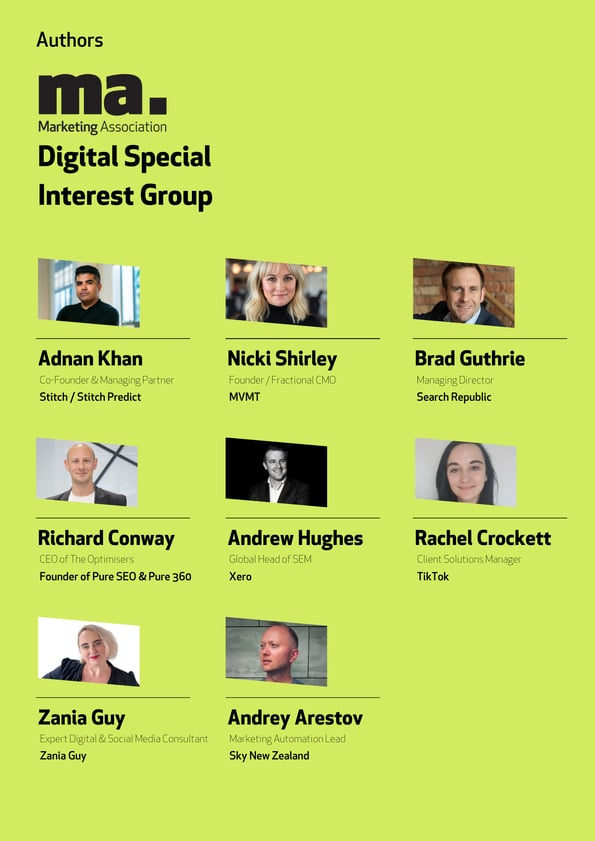
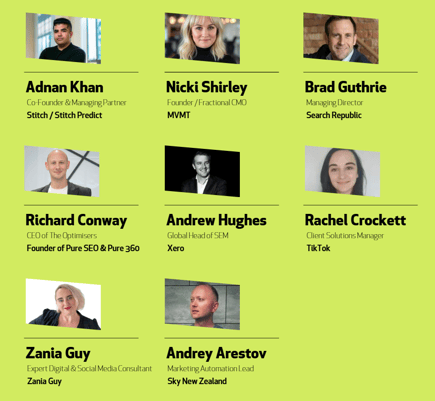
Source: Adnan Khan, Nicki Shirley, Brad Guthrie, Richard Conway, Andrew Hughes, Rachel Crockett, Zania Guy, Andrey Arestov, 4th December 2025
Category


.svg "MA-Logo (1)")
%20(1).png?width=682&height=530&name=Resource%20Hub%20-%20Articles%202024%20(530%20x%20682%20px)%20(1).png)