First Published: 17 June, 2026
Over the last few weeks, I’ve had a significant number of marketers ask about images they’ve created using AI. They are confused about intellectual property rights and worried they may be breaching copyright law.
Only last week, Radio NZ reported a New Zealand model, Elijah Timmins-Scanlon, accused streetwear brand Huffer of using artificial intelligence to create images with his likeness in a marketing campaign without compensation. The allegation has cracked open the issue of cost-cutting using AI. He accused Huffer of using AI to mimic his likeness in marketing images. He said the brand didn't offer him any additional compensation or renegotiate his original contract. Huffer have denied the allegations, and this article is not about making judgement; it’s about the difficulty all marketers face when creating a campaign.
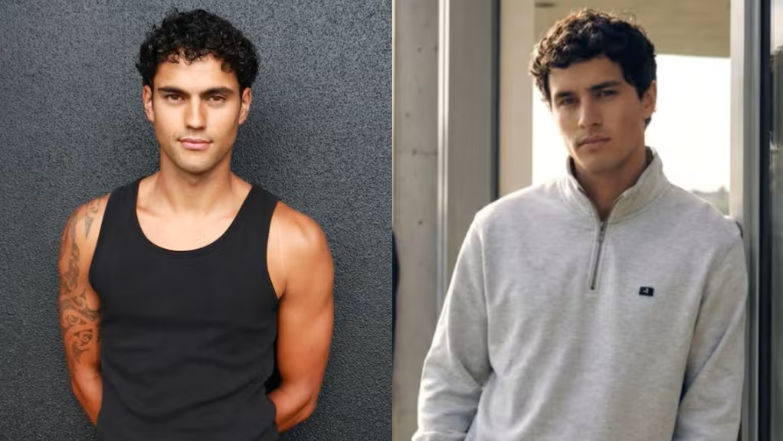
Elijah Timmins-Scanlon (left) and what he says is an AI-generated model based on himself and other models (right). (source: 1news).
Marketers can, and do, use AI to write ad headlines, email subject lines, landing page copy, and social posts. Tools like Midjourney or Adobe Firefly generate on-brand imagery and visual concepts, and other platforms can produce video content or voiceovers. Then AI can tailor content dynamically for different customer segments. So, you’d be stupid not to use it, wouldn’t you?
AI can do all that because AI models are trained on vast datasets scraped from the internet, often including copyrighted text, images, music, and code without licensing or permission
So, what are the dangerous areas for us to be aware of when eliciting help from AI?
AI can reproduce copyrighted material too closely — generating text, melodies, or images that are substantially similar to protected works. Image generators have produced outputs closely resembling specific artists' styles or even near-copies of existing works. AI tools can generate logos, brand names, or slogans that are confusingly similar to existing trademarks, and Generative AI used in marketing could produce content that misuses or mimics a competitor's brand identity. AI-generated deepfakes or ads could falsely imply endorsement by a trademarked brand or celebrity and, as was alleged at the beginning of this article, AI can generate realistic but false content featuring real people — damaging reputation or implying endorsement. All of these put us at risk legally and professionally.
Internationally, countries are developing legislation to govern the use of AI, but the divergence between EU, US, and UK approaches means multinationals face a difficult choice. Many large companies are gravitating toward EU standards as the global baseline — not because they want to, but because the penalties and reputational risks of getting it wrong are simply too high.
New Zealand has no AI-specific legislation, and the government has explicitly said it doesn't intend to introduce any. The Government has consistently signalled a "light-touch approach" will be taken to AI regulation, including that New Zealand will not introduce AI-specific legislation. Our approach prioritises innovation and business flexibility — but critics would argue it leaves individuals with limited legal recourse if AI systems cause harm to their privacy or intellectual property rights. Leading law firm Buddle Findlay writes that New Zealand's regulatory frameworks — such as for privacy and consumer protection — are largely technology-neutral and can be updated as needed to enable AI innovation and address new risks.
So, the most effective approach may be to combine principles-based self-regulation with specific rules for the highest-risk applications.
Professionalism and personal conscience will have to be your guiding mantra. Continually check you’re not stealing someone else’s work and follow these rules generously created by CLAUDE.
Follow these AI rules:
Treat AI Output as a First Draft. Always add substantial human creativity — the more a human transforms, edits, and builds on AI output, the stronger the originality claim and the lower the infringement risk.
Don't publish raw AI outputs — especially for images and music, review and modify before use
Verify Outputs Before Publishing. Run AI-generated images through reverse image search (Google Images, Tin Eye) to check for near-copies.
Use plagiarism checkers (Copy scape, Turnitin) on AI-generated text
Search trademark databases (USPTO, EUIPO) before using AI-generated brand names, logos, or slogans
For music, check melodic similarity against existing works using tools like Shazam or professional musicologists
Read the terms of service of every AI tool — some claim ownership of outputs or restrict commercial use
Use tools that grant you full commercial rights to outputs. And keep records of your outputs in case you need to demonstrate creative process
Keep Up with the Law: Copyright law around AI is evolving rapidly — what's unclear today may be ruled on soon.
The core principle is use AI as a creative collaborator, not a copying machine. The more original human judgment you apply, the safer your position.
Written by: Keith Norris, MA Compliance Consultant, 17th June 2026
Category

.svg "MA-Logo (1)")